Judgment: The habit that quietly makes BA and PM careers
I recently worked with a consulting company in the enviable position of having so many leads that they needed a faster way to write proposals for prospective clients.
We decided to complete the company’s journey to the dark side and see what Claude could do. We fed it key information about a prospective client, our standard services, and the specifics of the deal we wanted to propose.
At first glance, it looked like a professional proposal. Then we looked closer. Claude took some liberties with its descriptions of our standard services, wrote checks we couldn’t cash, and used 1,000 words to tell a fifteen-word story.
We obviously couldn’t send the proposal out straight from Claude. Hopefully, that surprises no one by now.
The sales manager agreed it was not ready to send, but she was understandably worried about turnaround time. “Surely,” she said, “we could just add more prompts to get closer to a finished proposal.”
I had to talk her off that ledge. No amount of prompting alone was going to produce a proposal she’d be proud to send to a potential client. We needed a human in the loop as a deliberate part of the proposal-generation workflow.
The project was full of judgment calls
It would be easy to have the tool produce a polished final proposal immediately. But those proposals were critical to forming a potential client’s impression of the consulting firm, so the content had to convey the right message.
Instead, I designed the workflow to create a draft, distinguish reusable boilerplate from customer-specific sections, and wait for a reviewed version before generating a final proposal.
There were a lot of judgment points in that workflow, including:
-
Which proposal sections were truly boilerplate
-
Which sections needed to be customized for the client
-
What information the assistant needed to create a useful draft.
-
What should happen when the necessary customer information is incomplete or unavailable.
-
When the process should stop and require a human review
Besides putting judgments in the workflow around rules, inputs, workflow steps, and section types, I also made the judgment call to forgo overall speed so that we could keep a human in the loop.
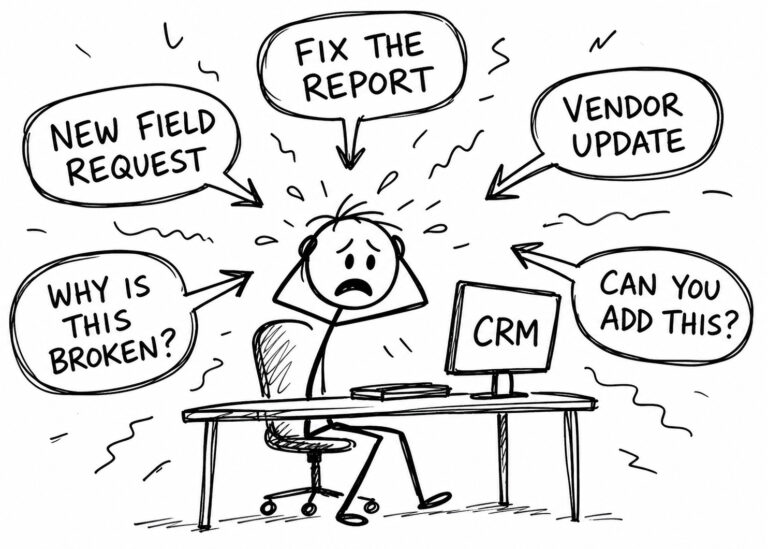
Most people think business analysts and project managers aren’t responsible for project-level decisions. What’s actually true is they’re often in the best position to exercise the judgment that results in true impact.
Why BAs and PMs get talked out of judgment
Business analysts and project managers are often described rather narrowly. BAs gather requirements. PMs manage scope, time, and cost.
That framing makes it easy for organizations, and eventually for BAs and PMs themselves, to assume that project-level decisions belong to someone else.
But the people closest to the workflows, data, and rules are often the people with the best context to make key decisions about the solution they’re working on.
That’s why, based on what the sales team wanted to accomplish, I was comfortable making the judgment calls I did about the proposal assistant workflow. Adding draft and review steps gave the sales team the scalability it needed without sacrificing the customer trust its proposals had to earn.
What judgment actually looks like
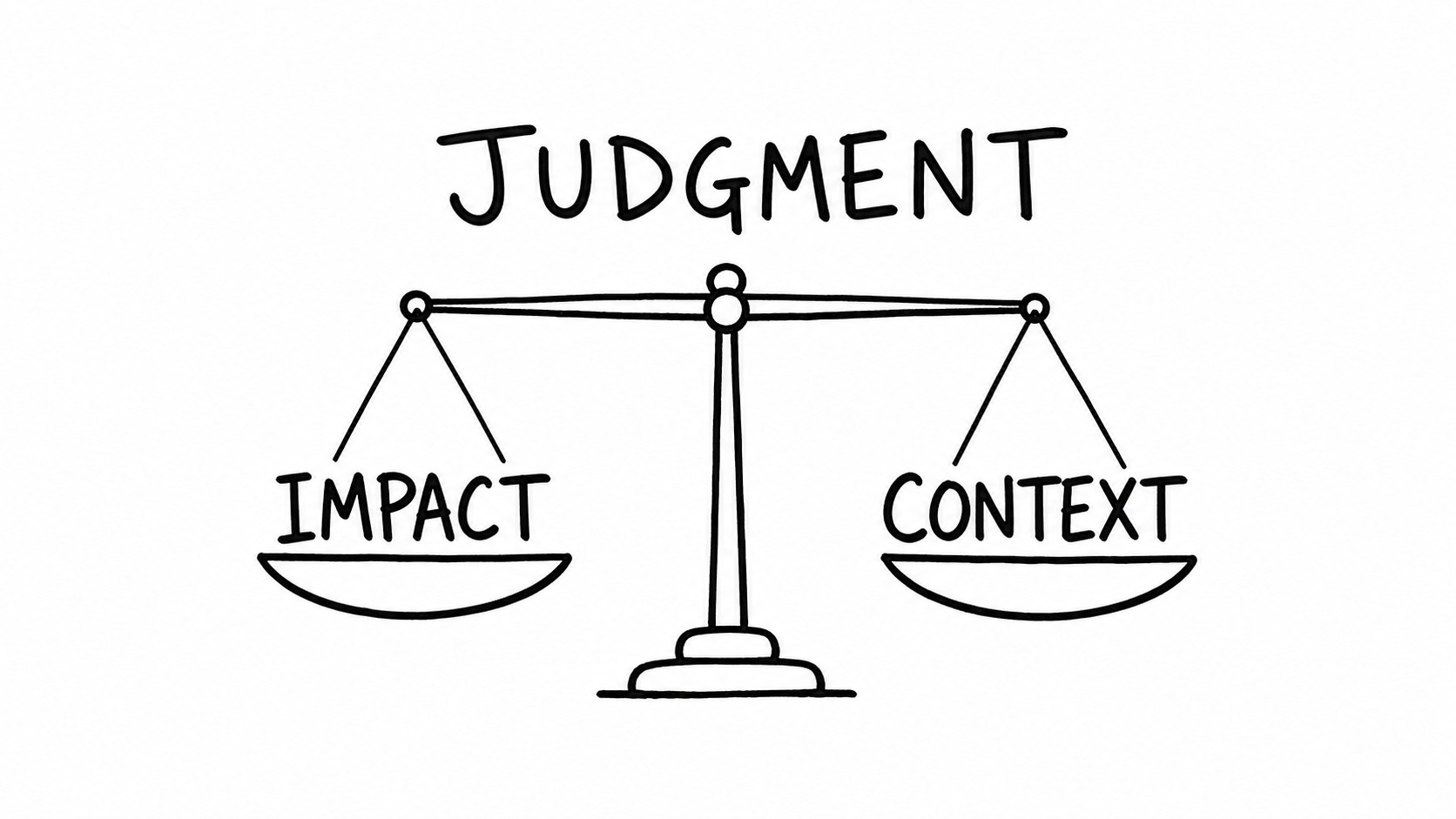
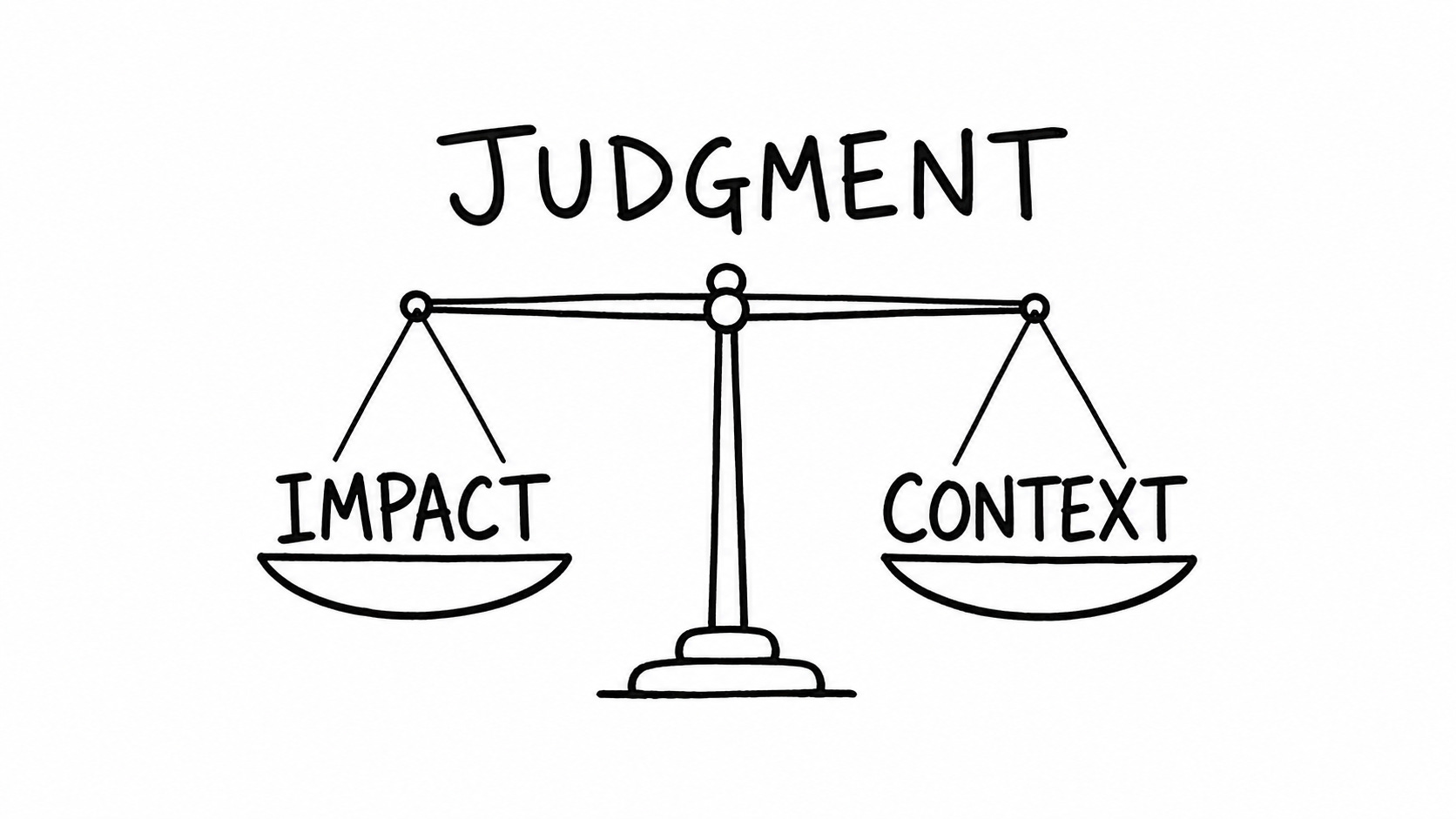
Judgment is the habit of balancing impact and context before deciding what happens next.
In the Proposal Assistant, the impact was clear: help the sales team turn around credible proposals that build trust and help win new business. The context was just as clear: the sales team needed speed, but a polished-looking AI output could easily be passed along without enough scrutiny.
That combination led to a tradeoff. We gave up a little speed by requiring a review step, because it made it far more likely that someone would catch overpromises, incorrect service descriptions, and generic customer language before the proposal reached a prospective client.
Business analysis and project managers practice judgment by making the decision logic visible. They identify what outcome matters, what is true about the current situation, what options exist, and what decisions will drive the most impact.
I’m not saying that BAs and PMs should just completely bypass authority. Another aspect of judgment is knowing when you can move forward with a decision and when you need to confer with people who have the ultimate decision-making responsibility for a given process.
The 5-Question Judgment Check
Here’s a quick set of questions I consider when determining whether I move forward with a decision or defer it to the ultimate decision maker for the solution.
These questions provide a repeatable way to move from passive coordination to disciplined decision-making.
The 5-Question Judgment Check: Before you move a project decision forward
-
What impact does this decision drive?
A proposal needs to help the sales team advance a credible customer conversation; generic output can undermine that goal. -
What’s true about the context we’re in—constraints, uncertainty, politics, and risk?
The available customer information varies, and some sections cannot responsibly be treated as reusable. -
What realistic options are feasible right now?
For the proposal Assistant: Auto-generate the final, generate a draft for review, or create a fully manual proposal.
-
What is the smallest next move that preserves impact and reduces risk?
Use AI to create a structured draft while requiring human review of the custom content before final generation. -
Who needs to know we’re using judgment here, not just following a template?
Make the review gate and section rules explicit so the sales team understands where judgment is required.
The common objection: “I’m not the decision-maker”
If you have any history as a business analyst or project manager, you may have been conditioned to say you don’t have the authority to make solution-level decisions, especially when outcomes affect budgets, sales commitments, scope, or stakeholders.
That’s partly true. You shouldn’t silently make every decision alone or hoard authority you really don’t have.
It can feel safer to escalate every ambiguous issue and wait for someone with more authority to decide. That approach doesn’t remove risk. It only delays the decision until the available options are worse, while leaving the real tradeoffs unidentified.
Judgment is not taking on all the risk yourself. It’s reducing avoidable risk by making the decision clearer and proposing the best next step.
It means saying, “Here is the impact, here is the context, here are the options, and here is the recommendation,” rather than merely escalating an unstructured problem.
Consider the proposal assistant. The workflow embedded a recommendation about where automation belonged and where human review was necessary. It didn’t eliminate accountability.
Judgment is a career habit
The value of the Proposal Assistant didn’t come from rapidly spitting out multiple proposals. It comes from helping the sales team turn reusable content and customer-specific insight into a credible final proposal.
People become indispensable when they can see beyond their assigned activity, balance impact and context, and help the work take the next best step.
Most people think business analysts and project managers aren’t responsible for project-level decisions. What’s actually true is they understand context the best to exercise judgment that keeps the work moving toward real impact.
Reply and tell me about a situation where you stepped up and made a project-level decision, even though your job title did not say “decision maker.” Sharing those stories will help other BAs and PMs practice judgment with more confidence.