I built something genuinely useful. Nobody could tell it had an impact.
I spent months with my team building EDAP-Product, a data platform at an MRO supplier. It pulled product data from three different systems and stitched it into one consistent view, something other teams could finally rely on when they needed to list the MRO supplier’s products for sale across different channels.
The platform grew out of an effort to get our products listed in a channel expansion that never happened. Instead of letting that work die, we repurposed it into something multiple teams could use. Teams that used to spend a few months wrangling product data by hand could just pull from EDAP-Product instead.
I was proud of it. So was my team. We had taken a dead project and turned it into something that made other people’s jobs measurably easier.
My time working on EDAP-Product didn’t end with a hard conversation. It ended quietly. The organization faced budget constraints, and when it came time to cut costs, my contract was the easiest place to save money. I was a contractor whose contract was up for renewal while the rest of the team were employees. They kept EDAP-Product going with a smaller team and didn’t renew my contract.
The frustrating aspect of this situation (beyond not having my contract renewed) was I could have prevented it. We had chances to tell leadership what EDAP-Product was worth. We talked about how it helped other teams and saved them a month or two of manual work every time they needed product data for a new channel.
We thought that story was enough on its own.
It wasn’t enough because it was still a delivery story. It described what we built and who used it. It never once translated into what leadership actually cared about, which was money. I didn’t know the concept of a money story back then. It didn’t sink in that leadership would ignore even compelling delivery stories if there wasn’t a currency symbol attached. That part didn’t click until I heard Rich Mironov talk about Money Stories.
When the budget got tight, EDAP-Product had no money story to point to, so it looked cuttable. I looked cuttable right along with it.
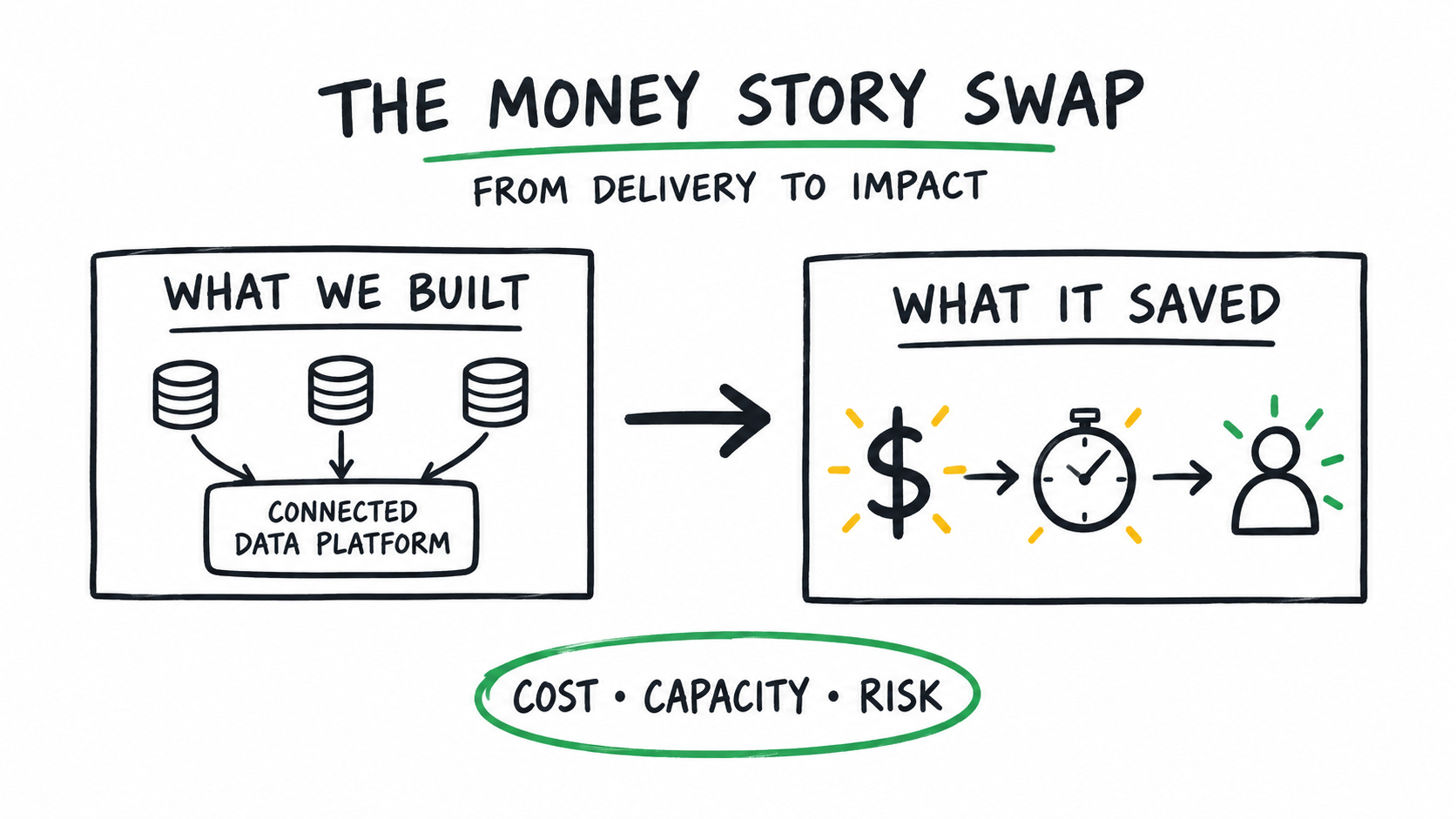
The Money Story Swap: 3 Steps before you report on your work
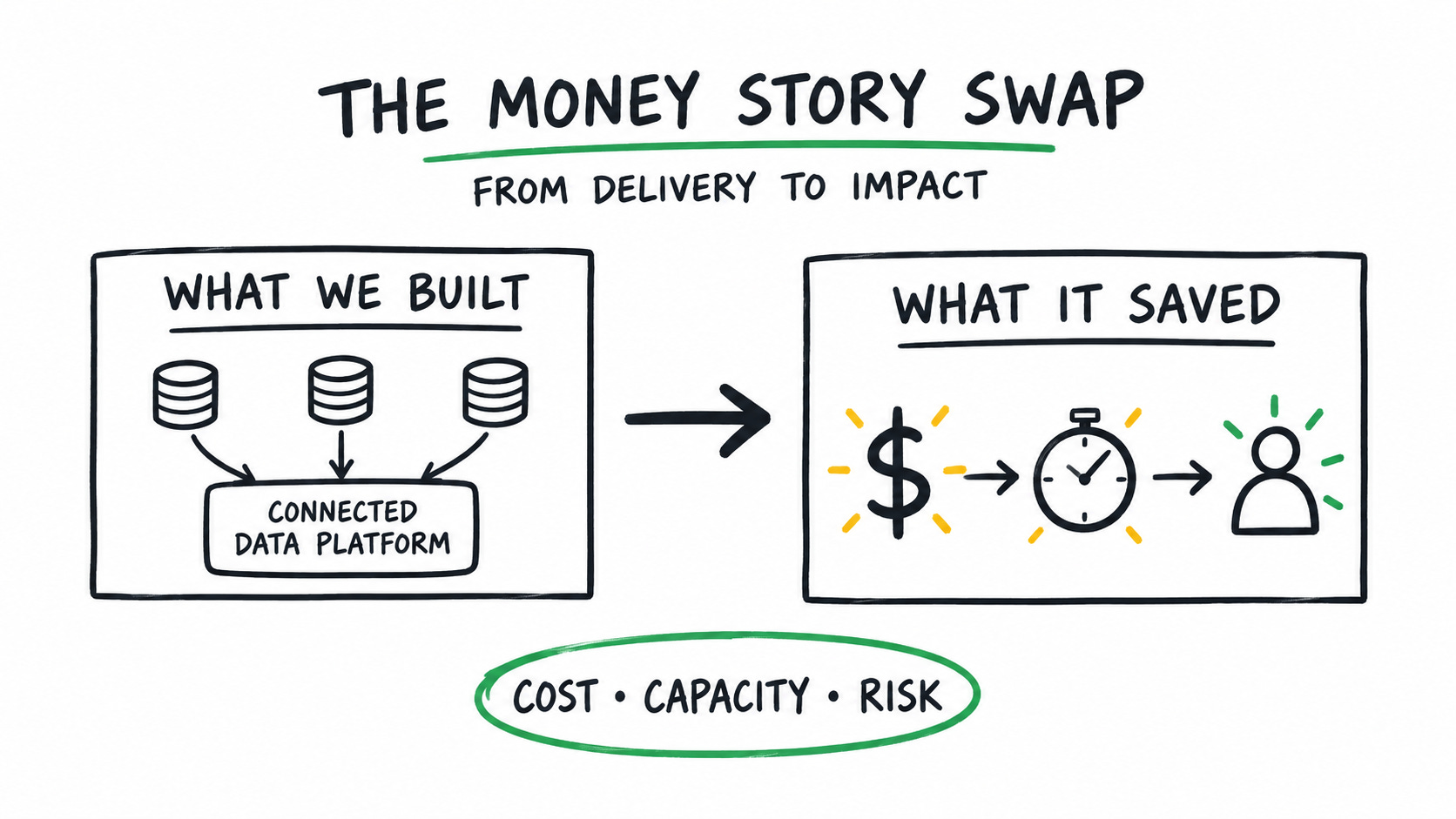
Here’s the framework I wish I had used back then.
-
Tell the delivery story first. What did you actually do? We built a platform that gives teams one consistent view of product data.
-
Find the money underneath it. What changed because you did that, in time, cost, risk, or revenue? Teams used to spend a month or two manually pulling product data for every new channel. EDAP-Product cut that to days.
-
Swap the ending. Keep the same opening and swap out the ending to show leadership the money. We built a platform that cut a month or two of manual work down to days for every team that needs product data for a new channel.
What to say when you don’t directly impact revenue
The pushback I hear most, and the one I would have made back then, is that not every internal product connects to revenue. EDAP-Product never touched a sale directly. It moved data around so other people could do their jobs faster. How do you put a currency symbol on that?
If I were in that situation now I’d note that revenue isn’t the only number leadership tracks. Internal products like EDAP-Product enable processes. When you reduce the effort a process takes, you either cut cost or free people up to do more without adding headcount. Both of those show up on the bottom line, even if they never touch a sales number.
You don’t need a straight line to revenue. You need a straight line to something leadership already watches, whether that’s cost, capacity, or risk. EDAP-Product had that line the whole time. We just never drew it.
Do this at your next product review
If you’re a product owner, you probably have a product review coming up. That’s the perfect opportunity to run the update on your internal product through the Money Story Swap. You don’t need a perfect number. You need a story leadership will actually listen to.
What’s the last dollar figure you used to describe your work’s impact? Reply and tell me. I want to know if you have one ready, or if, like me back then, you’re drawing a blank.