Three habits that keep your work visible when someone asks if they still need you
Matt LeMay asks teams a question that makes people squirm. If you were the CEO of your organization, would you fund your team?
Ask it before someone else does, because organizations keep deciding they can do without business analysts. A few years ago the reason was an agile transformation, and the assumption was that the team would figure out what they needed to do with sticky notes and sharpies. Some of those organizations found out they needed business analysts and product owners after all, which didn’t do much for the people who had already left.
Now the excuse is that AI can do all the things that business analysts and product owners do (write PRDs, manage backlog items, even interview synthetic users).
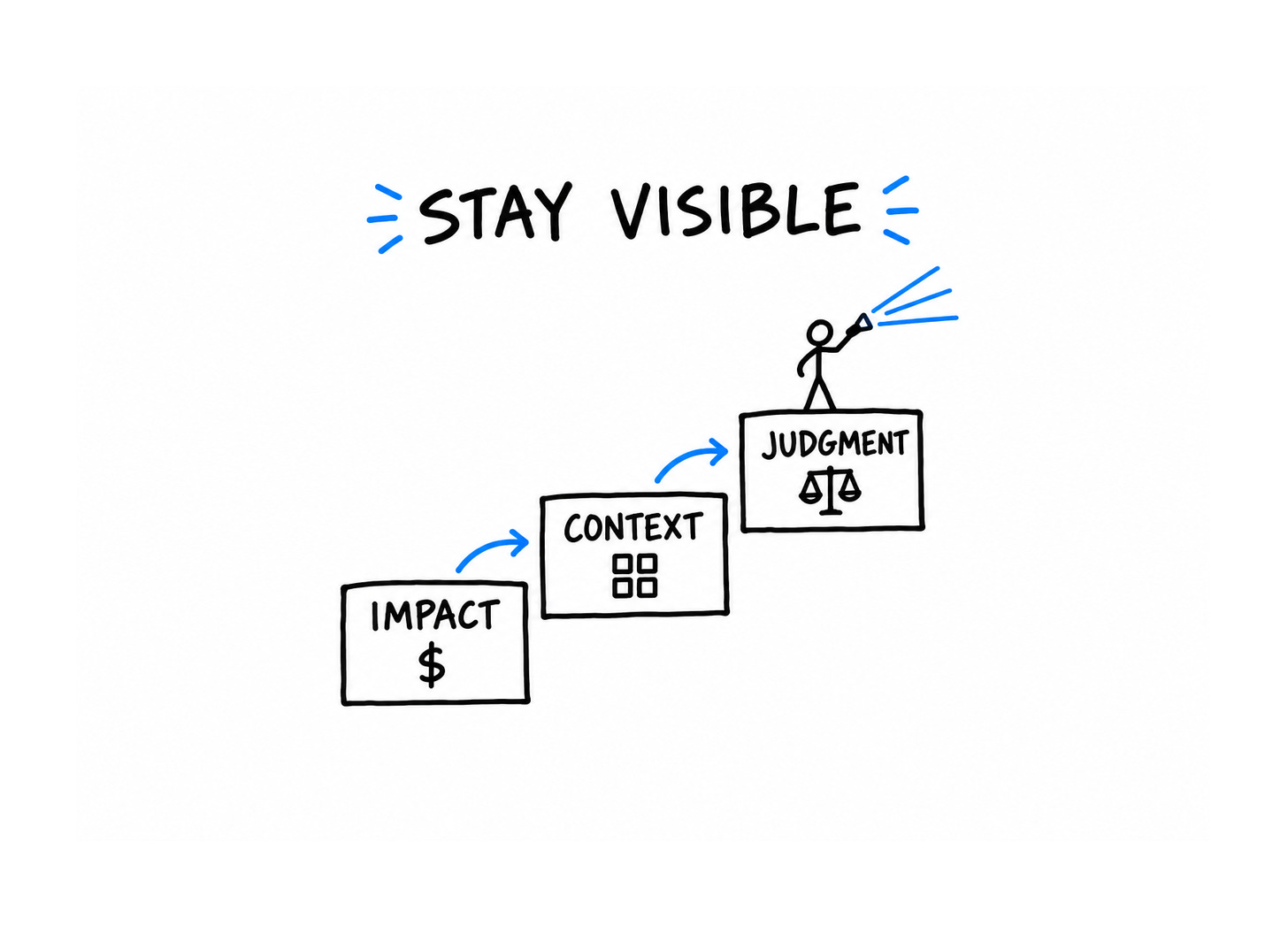
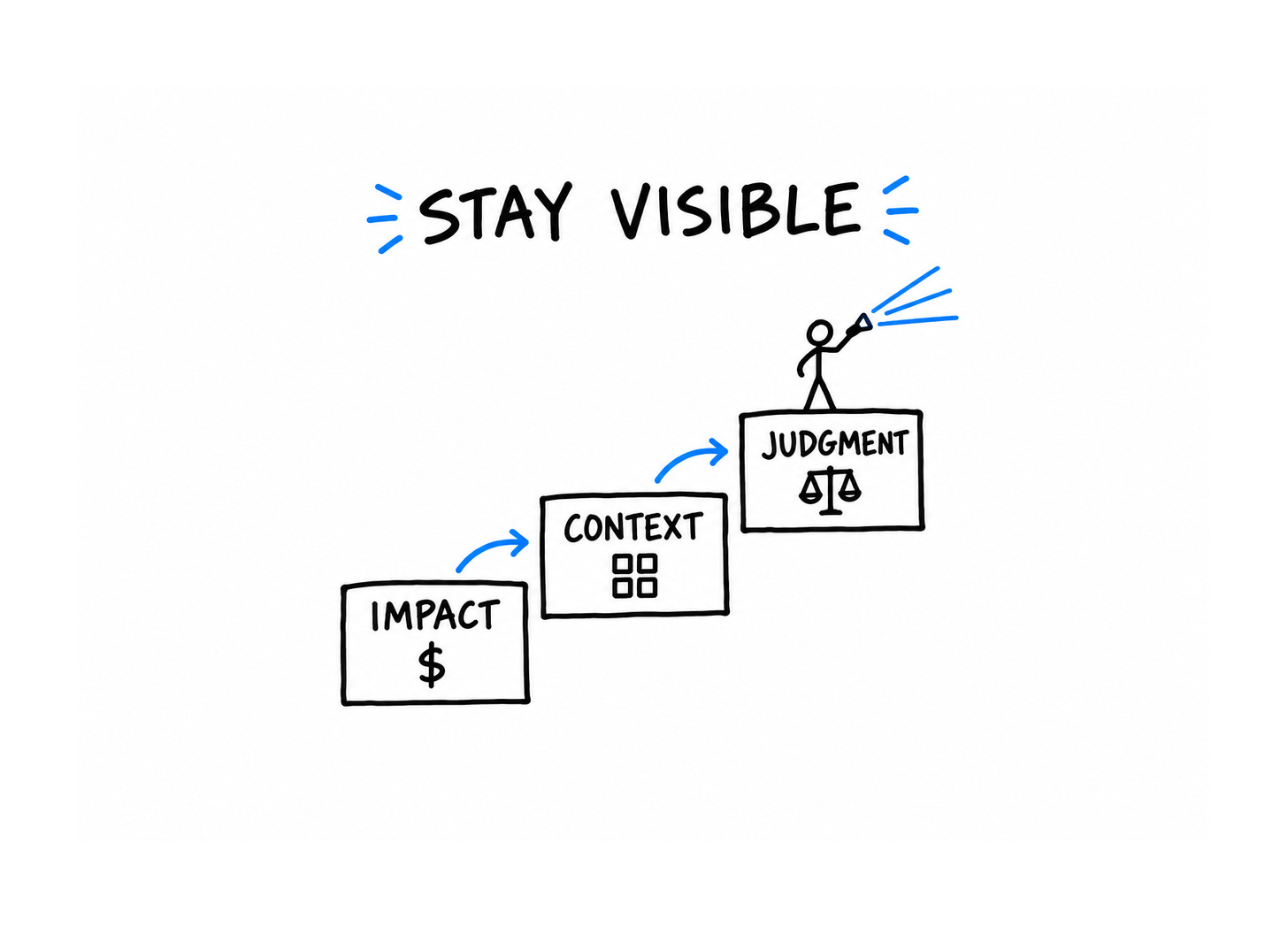
I’ve found three habits that help people who own internal products answer LeMay’s question and make it harder for anyone to overlook them. They are impact, context, and judgment. None of them is a guarantee, but they give you something concrete to point to when someone asks what you do.
I’ve written about each one on InsideProduct over the past couple of months. They build on each other, and this piece shows how.
Impact connects your work to how money flows
Find the number your leadership is trying to move, then work out how your work moves it. It might be inventory turns, the time it takes to stand up a new application, or revenue. Town halls and annual reports will usually tell you.
Then say it in a way that involves a currency symbol. Delivery stories are fine inside your team, but get ignored when funding decisions are made. I learned that when I was a contractor on a team that built a data platform for an MRO supplier. Every team that used the data platform found it valuable, but I didn’t convey that in language the people making budget decisions cared about. I didn’t think it was a big deal until contract renewal time.
My contract wasn’t renewed.
I picked up the money story idea from Rich Mironov. The full account, along with a three-step way to swap a delivery story for a money story, is in I built something genuinely useful. Nobody could tell it had an impact.
Context decides which practices fit the work
People in the business analysis and product management worlds like to talk about best practices.
That phrase makes my eyelids twitch every time I hear it.
There’s no such thing as a best practice. Whenever someone describes a best practice, they’re really talking about something that worked in one specific situation. That’s fine, but they often leave the situation out.
The model I use to read the situation scores work on complexity and uncertainty, and names the four resulting quadrants after animals. Todd Little introduced it in Stand Back and Deliver.
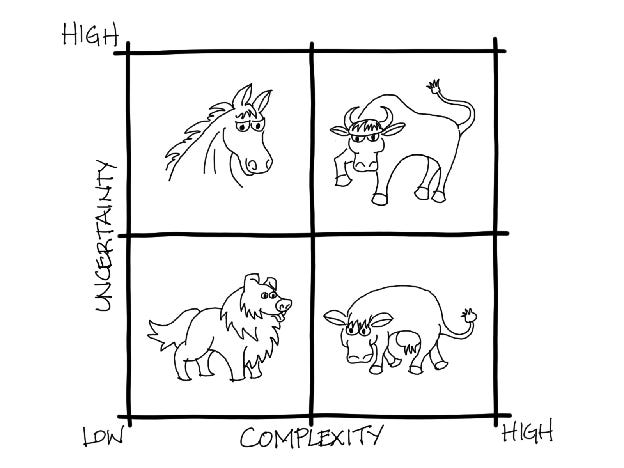
For example, in the sheepdog quadrant, much of the process you think you need is wasted effort. In the bull quadrant, you need real techniques for clearing up uncertainty and handling complexity. A cow is a high-complexity, low-uncertainty effort, like changing a big, familiar system that a lot of other things depend on.
Work can also move between quadrants partway through, which is what happened to a rebuild I describe in Your “simple rebuild” is lying to you. That article includes an assessment you can use to determine how to approach your own work.
Judgment builds on the first two
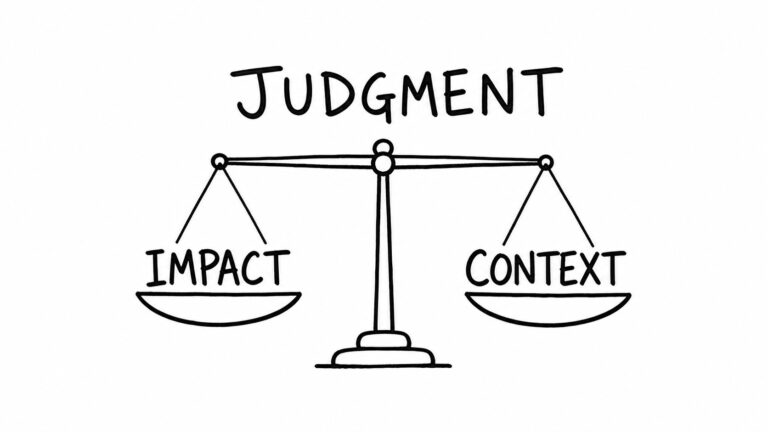
Judgment is the habit of balancing impact and context before deciding what happens next. In Judgment: The habit that quietly makes BA and PM careers, I wrote about giving up some speed on purpose in an AI proposal workflow, and about the five questions I use before moving a decision forward.
The usual objection is that you’re not in a position to make those calls. When we built the Agile Extension to the BABOK Guide, we added decision horizons: strategic, initiative, and delivery. Chances are you make delivery decisions all the time and initiative decisions now and then.
You probably don’t make many strategic decisions, but you can help the people who do. The people making those strategic calls work with a thin slice of the information. The most useful thing you can hand them is a recommendation with the impact, the context, and the options already laid out.
What it looks like when all three are in play
At Illuminated, where I’m director of delivery, we use all three habits together, and each one feeds the next.
Impact gave us the numbers
In a company planning session we set a three-year north star, a one-year north star, and four KPIs for marketing, sales, service, and our expert network. Those are the numbers we’re trying to move, and everything after that has to answer to them. I wrote about how the session worked in How to run a strategy session that actually ends in decisions.
We asked what we could do to move those numbers and sorted the ideas onto a Now, Next, Later, Never roadmap. Because the numbers came first, very few ideas ended up in Never.
Context showed us we had a cow
Those numbers also help us decide which AI tools to build, and we’ve built several for the Illuminated leadership team. Because several of our tools get used by more than one person, we also put the instructions behind our skills in source control, so everyone is working from the current version.
At first glance you’d think they would all rest comfortably in the sheepdog quadrant, since each one tends to focus on a single job. Our Growth Blueprint Assistant, the tool behind the blueprint work we do for clients, stampeded over that assumption because several people need to use it at the same time. That added complexity moved it squarely into the cow quadrant.
Judgment made the call
Once we knew it was a cow, we had a choice to make. We could limp along, or we could rearchitect how the tool records information so people don’t overwrite each other’s changes.
The decision wasn’t mine to make. My boss, the CEO, spotted the problem, so I queued up an option to address it and talked it through with him. Given what the tool was worth to the team and the complexity we had just uncovered, we chose to rearchitect it now. Then we told the team working on a current growth blueprint about the upcoming change. It’s too early to tell whether the rearchitecture will pay off, but the team knows what changed and why.
AI can synthesize and draft a lot of things for us. A person still has to decide what to do with it and how. In our proposal workflow, that means a person edits a Markdown draft before the designed page gets built.
Which habit to pick up first
If you’re not sure where to start, start with the situation in front of you.
If you have a product review coming up, think about the impact you’re providing and work out how to say it in language your leadership will understand. The money story swap in the impact article is a good place to begin.
If you’re starting work on a new product, or a major update to an existing one, take the context assessment to see how to address the key risks you face.
If work on your product is stalled because of open decisions, run the biggest unmade decision through the judgment check to see where you can take some ownership and get things moving again.
Impact gets you visible. Context makes you effective. Judgment makes you indispensable.
Which of those situations are you in right now? Hit reply and tell me, and include a note on what kind of organization you work in, since I’ve found the answer changes with context.